
CNC
CNC milling of acrylic, wood and Dibond in Warsaw, Poland
CNC milling of large sheets, from simple formats to parts with holes, countersinks and an edge ready for bonding.
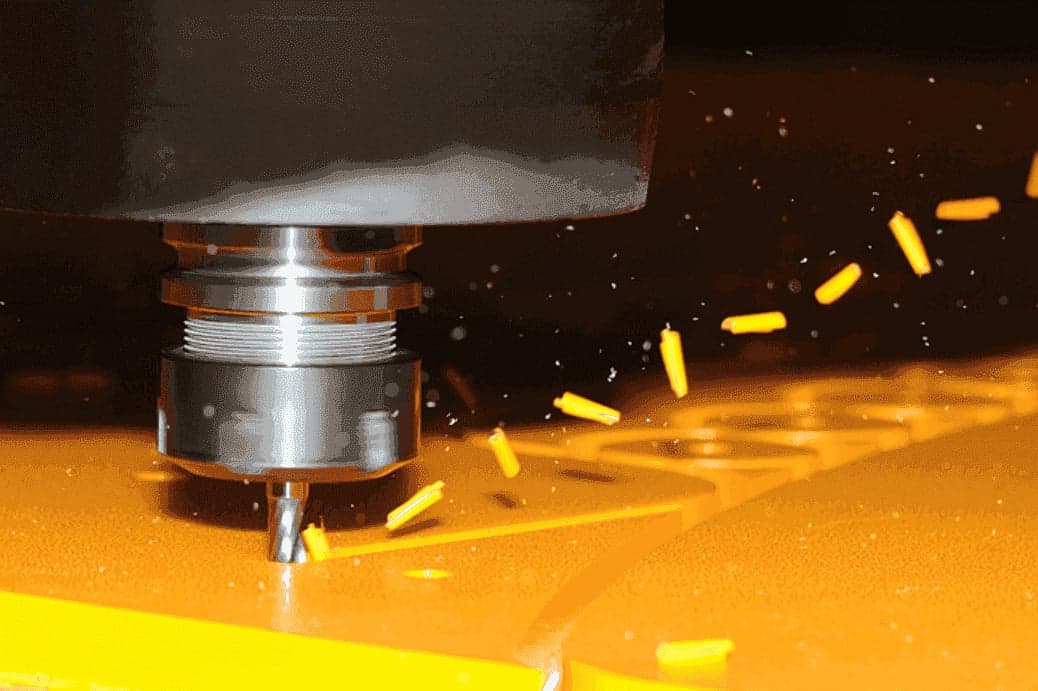
On the Kimla milling machine (2100×3100 mm working area) we mill, countersink and drill plastics, wood and composites. The vacuum bed holds full sheets, and the automatic tool changer shortens changeovers on series.
When CNC beats the laser
CNC takes on what the laser does not like: thick sheets, polycarbonate, Dibond with an aluminium skin, countersinks for hinges and a matt edge for chemical bonding. Large formats of light boxes, enclosures and furniture panels fit on one bed.
Typical jobs: machine guards with mounting holes, milled letters from thick PMMA, Dibond light box bodies, MDF and HDF blanks and 2.5D prototypes. The file can be DXF, AI or STEP, and we prepare the milling toolpaths for our tools.
After milling, parts often move on in the same hall: bending, bonding, UV printing and LED assembly. One location means a shorter lead time and less risk when handing over a semi-finished part.
Parameters that matter
- Working area of 2100 × 3100 mm (full sheets)
- Automatic tool changer
- Vacuum bed hold-down
- Contours, drilling, countersinking and 2.5D milling
- Matt edge ready for bonding or assembly
Who we mill for
- Furniture, fit-out and stand builders
- Advertising agencies and contractors (light boxes, letters, Dibond)
- R&D departments and prototype shops needing guards and parts
- Plants with maintenance departments: blanks and viewing windows for machines
How milling works
- You send a model, a DXF or a drawing with dimensions and tolerances.
- We prepare the toolpaths and choose cutters and parameters for the material.
- We mill on the Kimla 2100×3100 and check the holes and key dimensions.
- We hand the blanks on for further processing in the hall, or pack them for shipping or collection.
FAQ
Frequently asked questions
When should I choose CNC instead of the laser?
For thick sheets, countersinks, 2.5D milling, polycarbonate, Dibond, and when you need a matt edge for bonding. The laser stays for thin acrylic and a clean optical outline.
What is the machine’s working area?
Kimla 2100 × 3100 mm. We mill large formats of acrylic, Dibond, MDF and polycarbonate without needlessly splitting the sheet.
Can CNC make mounting holes and countersinks?
Yes. We mill contours, drill, countersink for screws and hinges, and prepare edges for assembly or bonding.
Which materials do you mill?
Acrylic, PVC, solid polycarbonate, Dibond and similar panels, MDF, HDF, plywood and furniture boards. We choose cutter parameters for the material and thickness.
Which files do you need for CNC?
Preferably DXF, AI, vector PDF or STEP and other CAD files. A drawing with dimensions is also enough, and we prepare the toolpaths for our machine.
How long does CNC milling take?
Single parts and small batches usually take 3–7 working days from quote acceptance. Large formats and series take 7–14+ days. We state the lead time in the quote.
Do you also bond or add LED after milling?
Yes. In the same workshop we combine milling with bonding, bending, UV printing and LED assembly if the project requires it.
Need a quote for acrylic fabrication in Poland?
Send dimensions, a DXF/AI/PDF/STEP file or a short brief. We reply Monday to Friday, 8:00–16:00 CET.